REAL FOOD. REAL PROTEIN. REAL PEOPLE. REAL GOOD.
Snacking,
upgraded.
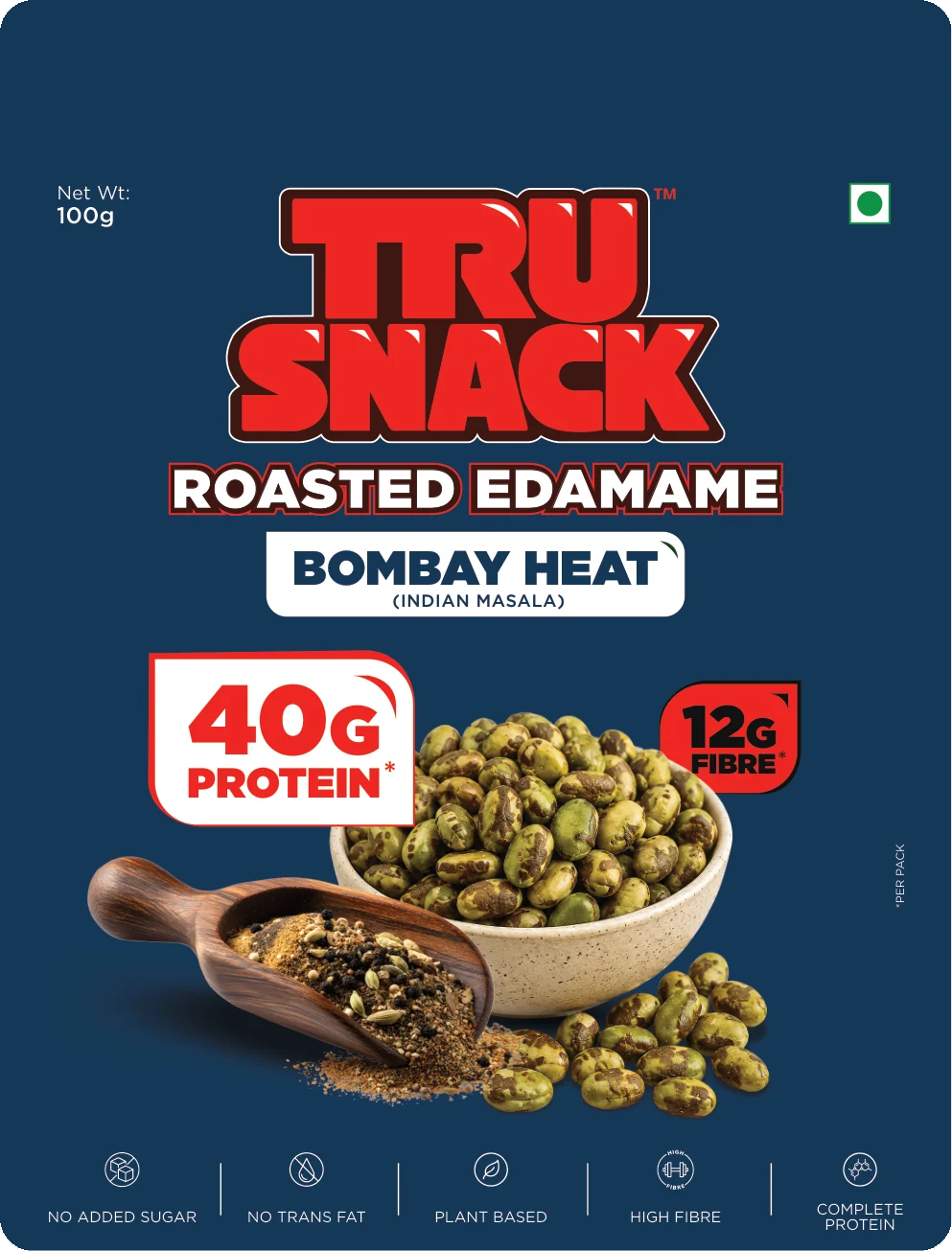
Premium edamame, dry roasted to a proper crunch and seasoned with real spice. Up to 44g of protein per pack. Never fried, never filled out with maida.
PROTEIN
FIBRE
SUGAR
GLUTEN FREE
THREE FLAVOURS
Pick your heat
THE MATH
Same crunch.
7X THE PROTEIN!
Per 100g*
*vs typical deep fried chips
HOW IT'S MADE
Roasted.
Never fried.
{{ s.body }}
No palm oil. No maida. No flavour enhancers pretending to be food.
THE METHODS
Roasted vs other snack methods
Roasting keeps the protein. Frying just adds fat. Baking still needs oil to get there.
Looking for AIR FRYING? It's pretty much the same thing as Roasting, just a marketing spin-off, really. (Go check with your Claude if you don't believe us.)
IN THE WILD
Desk. Party. Munchies.
The 4pm meeting snack
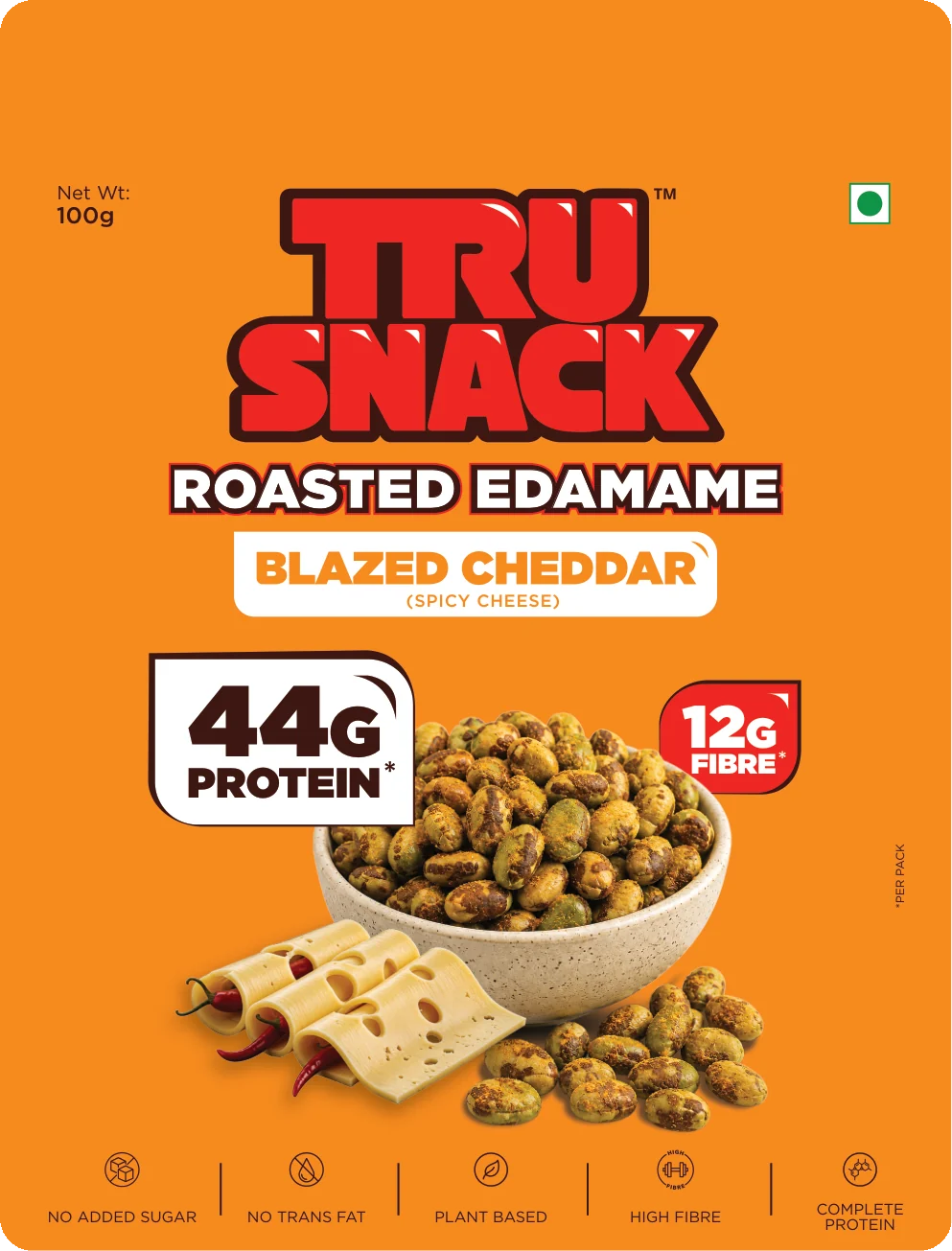
Beats a bowl of fried anything
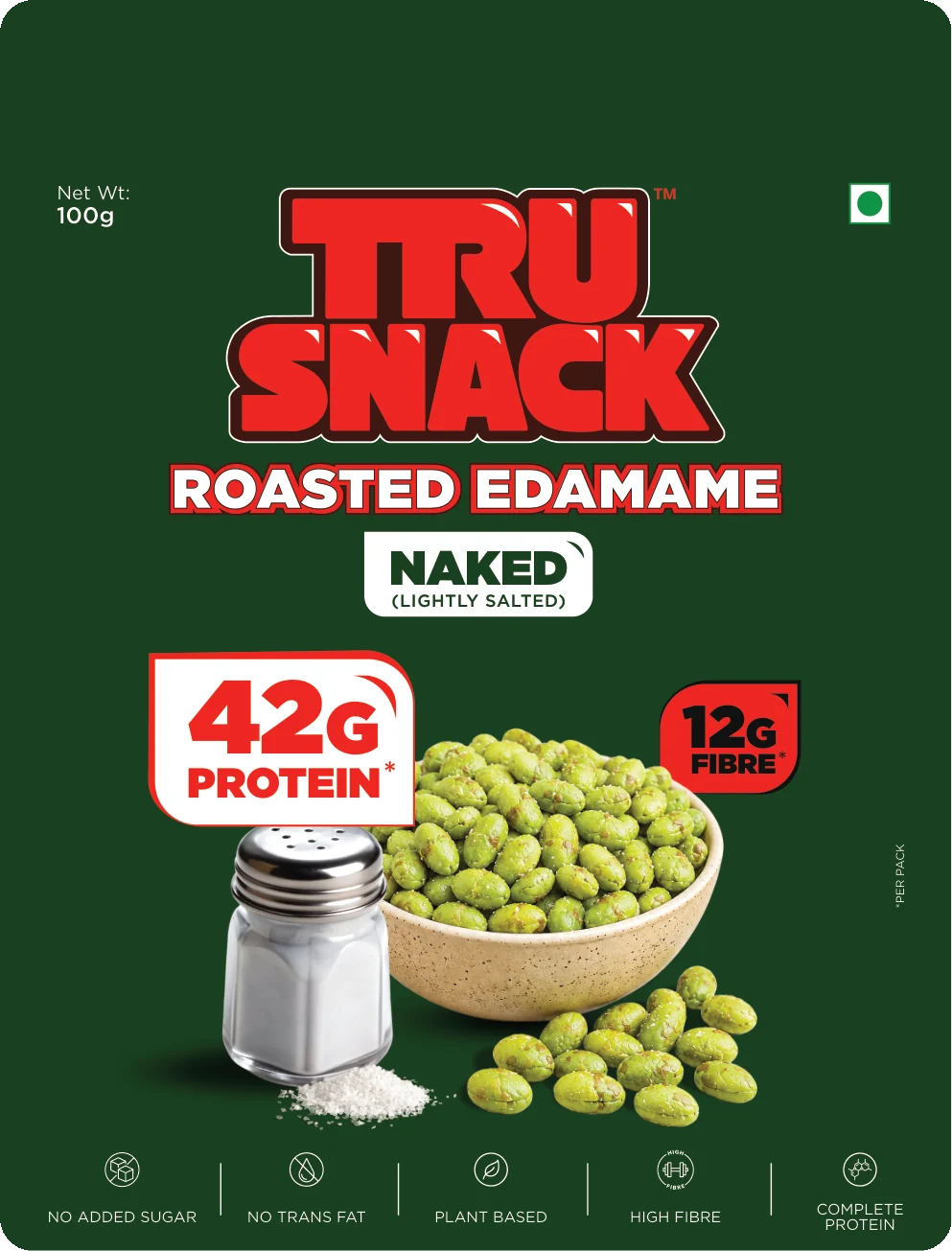
42g of protein, no shaker needed
REVIEWS
What people say
{{ r.quote }}
FAQ
Fair questions
{{ q.a }}
TRU SNACK · FIELD NOTES NO. 01
Why we roast everything.
A short history of the oldest cooking trick in India, told badly and with enthusiasm.
Watch your nani make garam masala. She will not grind the spices first. She puts them in a dry pan, no oil, and moves them around until the kitchen smells like the kitchen. Only then does she grind. Ask her why and she will say bhunna padta hai, it has to be roasted, in the tone of someone being asked why water is wet.
She is right, and she is also carrying a three thousand year old instruction.
Walk out of the house. The murmura in your bhel was not baked or fried, it was blasted in hot sand until it exploded. The moongphali guy is doing the same thing in a drum. Bhuna chana, the original pehelwan protein, was the wrestler’s snack long before anyone put a whey scoop next to it. Makhana, dry roasted. Every one of these is oil free, shelf stable and older than the shop selling it.
Then there is sattu. Roasted gram, ground to flour, and for centuries the food you carried when you left home, because it did not spoil and it did not need cooking. Add water, drink, keep walking. Bihar has been doing this longer than most countries have existed.
“Pull the moisture out and nothing needs to be added back.”
Which is roughly how we ended up with a six month shelf life and no preservatives on the ingredients list.
Ayurveda got specific about this. The classical texts sort food into laghu and guru, light and heavy. Roasted grain is filed as laghu. The exact same grain, boiled, is heavier and harder work for the body. Someone sat down two millennia ago, compared the two, and wrote it down.
Go to an Indian wedding. At some point the bride’s brother pours puffed roasted rice into the sacred fire. That ritual is called Laja Homa and it is not a recent flourish. It is Vedic. People are performing it in Andheri this weekend.
Go back further and you find dhana in the Rigveda, roasted grain, offered up to Indra. And saktu, roasted grain flour, which is just sattu wearing an older name. Gods were being handed roasted snacks before most of the subcontinent had a written script.
So when we say Tru Snack is roasted and not fried, we are not borrowing a wellness word off an American label. Dry heat, no oil, deep flavour, long shelf life. India worked this out early, wrote it into scripture, fed it to wrestlers and travellers, and still throws it into the fire at weddings.
We just pointed it at a bean nobody here had thought to try.
TRU SNACK · FIELD NOTES NO. 02
The bean India grows and refuses to eat.
We are one of the biggest soybean growers on earth. We feed almost all of it to animals. Here is how that happened.
Start with the uncomfortable number. India grows somewhere north of eleven million tonnes of soybean a year, which puts us in the top five on the planet. Almost none of it is eaten by Indians. We crush it for oil, and the leftover meal, the part with all the protein in it, goes to poultry and cattle or onto a ship.
So we grow one of the best protein crops in the world, extract the fat, and hand the protein to a chicken.
Soy is not Indian by origin. It was domesticated in China something like seven to nine thousand years ago, and the word edamame is Japanese, roughly “beans on a branch”, turning up in writing around 1275. India got serious about soy only in the 1960s and 70s, and we imported it as an oilseed. Not as food. That single decision is why your nani has no soybean recipe.
Go up to Kumaon or Garhwal and ask about bhatt, the small black soybean grown there for generations. Bhatt ki churkani is a proper old dish, not a health fad. Nobody in Delhi has heard of it.
The Northeast goes further. Manipur has hawaijar, Nagaland has axone, Sikkim and the hills have kinema, Meghalaya has tungrymbai. All fermented soybean. All centuries old. All completely invisible to the rest of the country, which is a fairly good summary of how India treats its Northeast.
“The bean is not foreign to India. It is foreign to Mumbai.”
Which is a different problem, and a much easier one to fix.
Edamame is just the soybean picked young, while it is still green and soft, before it hardens into the beige thing that goes to the crusher. Same plant, earlier harvest. It happens to be one of the very few plant foods that is a complete protein, carrying all nine essential amino acids, which is the sort of thing legumes are usually not able to claim.
Japan eats it steamed and salted, out of the pod, with beer. India, until roughly now, mostly eats it never. There is no ancient Indian edamame tradition to point at and we are not going to invent one.
What we did do is take a bean this country already grows extremely well, apply the oldest cooking method this country has, and put forty four grams of protein in a hundred gram pouch.
Grown here. Roasted here. Finally, eaten here.
Nothing to hide.
Naked: Roasted Edamame (Soybeans), Iodised Salt. That's the entire list.
Bombay Heat: Roasted Edamame, Spices & Condiments, Iodised Salt.
Blazed Cheddar: Roasted Edamame, Cheese Seasoning, Rice Flour, Anticaking Agent (INS 551), Natural Flavour.